

Enquire Now
Advanced TomoTherapy® Radixact® X9 in Visakhapatnam
Precise Radiation Treatment. Personalised Cancer Care
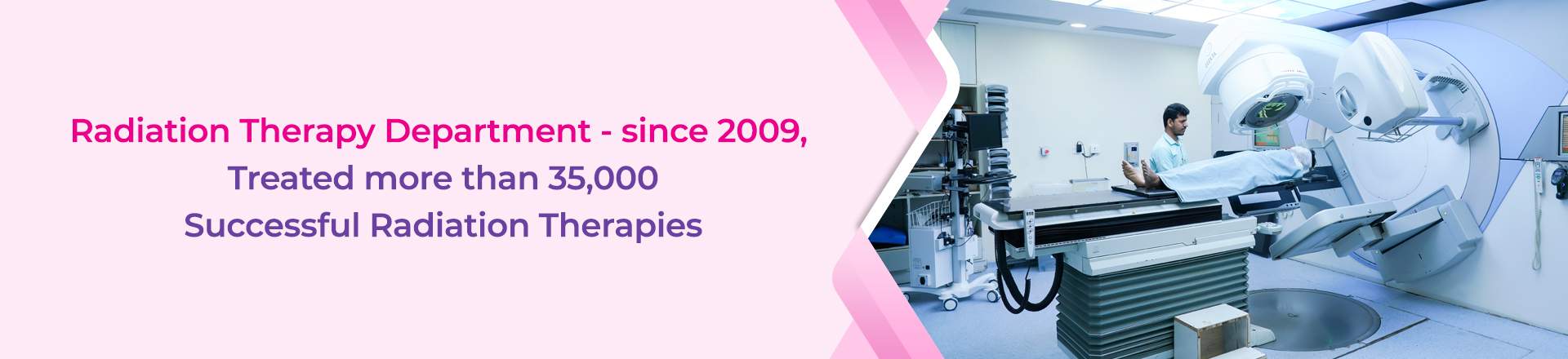
Mahatma Gandhi Cancer Hospital & Research Institute (MGCHRI), Visakhapatnam, offers advanced radiation treatment using the TomoTherapy® Radixact® X9 System.
This image-guided radiation therapy platform combines treatment planning, imaging and radiation delivery to accurately target tumours while helping reduce unnecessary radiation exposure to nearby healthy tissues.
Supported by experienced radiation oncologists, medical physicists, radiation therapists and a multidisciplinary cancer-care team, MGCHRI provides personalised radiation treatment for a wide range of cancers.
What Is TomoTherapy?
TomoTherapy is an advanced form of Image-Guided Intensity-Modulated Radiation Therapy (IG-IMRT). The system delivers radiation from multiple angles as it moves around the patient in a spiral or helical pattern.
Imaging can be performed before treatment to verify the tumour’s location and the patient’s position. This enables the radiation team to deliver the prescribed dose accurately according to the individual treatment plan.
TomoTherapy® Radixact® X9 at MGCHRI
The Radixact® X9 System enables highly conformal radiation delivery using advanced imaging and treatment-planning capabilities. It can treat small, complex or multiple tumour sites while helping protect surrounding organs and healthy tissues.
The system supports:
The system supports:
- Image-Guided Radiation Therapy (IGRT)
- Intensity-Modulated Radiation Therapy (IMRT)
- Adaptive Radiation Therapy
- Stereotactic Radiosurgery (SRS)
- Stereotactic Radiotherapy (SRT)
- Stereotactic Body Radiation Therapy (SBRT)
- Total Body Irradiation (TBI)
- Total Marrow Irradiation (TMI)
- Craniospinal Irradiation (CSI)
- Complex and multiple tumour-site treatments
Synchrony® Real-Time Motion Tracking
MGCHRI’s Radixact® platform incorporates Synchrony® real-time motion management for selected patients and tumour types.
Tumours in organs such as the lungs may move as a patient breathes. Synchrony® uses continuous imaging and intelligent motion tracking to monitor this movement during treatment and adjust radiation delivery accordingly.
Potential benefits include:
- Real-time tumour-motion monitoring
- Greater accuracy for moving tumours
- Reduced treatment margins in appropriately selected cases
- Better protection of surrounding healthy tissues
- Personalised radiation delivery
Suitability for Synchrony® treatment is determined by the radiation oncology team after clinical evaluation and treatment planning.
Benefits of TomoTherapy Treatment
Precise Tumour Targeting
Radiation is shaped according to the tumour’s size, location and contour.
Daily Image Guidance
Pre-treatment imaging helps verify patient positioning and tumour location before radiation delivery.
Protection of Healthy Tissues
The system is designed to concentrate the prescribed dose on the tumour while limiting exposure to nearby organs.
360-Degree Radiation Delivery
Radiation can be delivered continuously from multiple angles around the patient for conformal dose distribution.
Treatment of Complex Tumours
TomoTherapy may be suitable for tumours located close to sensitive organs or for cancers involving multiple treatment areas.
Personalised Treatment Planning
Every patient receives an individual radiation plan based on imaging, diagnosis, tumour stage and clinical requirements.
Non-Invasive Treatment
External-beam radiation treatment does not require surgical incisions.
Cancers Treated with TomoTherapy
Depending on the patient’s diagnosis and treatment plan, TomoTherapy may be used for:
- Brain tumours
- Head and neck cancers
- Lung cancer
- Breast cancer
- Oesophageal cancer
- Liver cancer
- Pancreatic cancer
- Kidney cancer
- Prostate cancer
- Cervical cancer
- Uterine and other gynaecological cancers
- Rectal and gastrointestinal cancers
- Lymphomas
- Sarcomas
- Bone and spinal tumours
- Paediatric cancers
- Multiple or recurrent tumours
- Metastatic cancer involving selected sites
A radiation oncologist will determine whether TomoTherapy is appropriate based on the cancer type, location, stage, previous treatment and overall health of the patient.
The TomoTherapy Treatment Process
1. Radiation Oncology Consultation
The radiation oncologist reviews the diagnosis, medical history, biopsy findings and imaging reports.
2. CT Simulation
A planning CT scan is performed in the required treatment position. Immobilisation devices may be used to help maintain accurate positioning.
3. Treatment Planning
Radiation oncologists and medical physicists develop a personalised plan to target the tumour while protecting nearby organs.
4. Image Verification
Before treatment, imaging is used to confirm the treatment area and patient position.
5. Radiation Delivery
The Radixact® X9 System delivers radiation according to the approved treatment plan.
6. Clinical Monitoring
The care team monitors treatment response, side effects and the patient’s overall condition throughout the course of radiotherapy.
Why Choose MGCHRI for TomoTherapy in Visakhapatnam?
- TomoTherapy® Radixact® X9 technology
- Synchrony® real-time motion tracking
- Experienced radiation oncology specialists
- Individualised treatment planning
- Multidisciplinary Tumour Board review
- Advanced medical physics and dosimetry support
- Integrated diagnostic imaging and nuclear medicine
- Surgical, medical and radiation oncology under one roof
- Dedicated adult and paediatric cancer-care services
- More than 30,000 radiation treatments delivered
- Over 20 years of comprehensive cancer care
- Support for patients from Andhra Pradesh, Odisha and neighbouring regions
Frequently Asked Questions
Is TomoTherapy suitable for every cancer patient?
No. The suitability of TomoTherapy depends on the cancer type, tumour location, stage, previous treatments and the patient’s general health. A radiation oncologist must evaluate each case.
Is TomoTherapy painful?
Radiation delivery itself is generally painless. Patients may experience side effects during or after treatment depending on the treatment area and radiation dose.
How long does each treatment session take?
The duration varies according to the treatment plan and complexity of the case. The radiation therapy team will explain the expected session time before treatment begins.
How many TomoTherapy sessions are required?
The number of sessions differs for every patient. Some treatments may require a small number of high-dose sessions, while conventional radiation courses may continue over several weeks.
Can TomoTherapy treat moving lung tumours?
For appropriately selected cases, Synchrony® technology can monitor tumour movement during treatment and adapt radiation delivery in real time.
Can TomoTherapy be used after previous radiation treatment?
Re-irradiation may be considered in selected cases. The radiation oncologist must carefully review the previous radiation dose, treatment area and current clinical condition.
What are the possible side effects?
Side effects vary according to the area treated, radiation dose and individual health. They may include fatigue, skin changes, nausea or treatment-site-specific symptoms. The clinical team will discuss expected effects and supportive care before treatment.
“Best Department of Radiation Oncology Award by NTR Vaidya Seva Trust 2018”
Our Radiation Oncology department has been recognized by NTR-Vaidya Seva Trust & Government of Andhra Pradesh for being the BEST in the state in providing exceptional services and quality care in Radiotherapy. The Department of Radiation Oncology at our hospital humbly commits to rededicate ourselves to the service of cancer survivors and strives even harder to continue to be the best-performing radiation-oncology specialty in the state.


